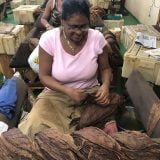
Cigar blending is engineering with organic material. The goal is to produce the same flavour experience across thousands of cigars, using leaf that varies by harvest, region, and fermentation batch. Understanding how blenders approach this makes you a considerably more informed smoker.
The Three Components
Every premium hand-rolled cigar has three distinct tobacco components, each serving a different role:
- Filler: The internal blend — typically two to four leaf types in specific proportions. This is the primary source of flavour strength and body. The arrangement of filler leaves within the bunch determines combustion behaviour.
- Binder: A single leaf wrapped around the bunched filler to hold it in shape. More structural than flavour-forward, though some blenders use a binder with specific characteristics to contribute to the mid-palate.
- Wrapper: The outermost leaf, applied in a spiral from foot to head. The most expensive component. Contributes an estimated 20–30% of total flavour, disproportionate to its physical proportion of the cigar.
Filler Leaf Roles
| Leaf type | Position on plant | Character | Role in blend |
|---|---|---|---|
| Ligero | Top (most sun exposure) | Strong, oily, slow-burning | Placed at centre of bunch; provides body and strength |
| Seco | Middle | Medium body, good combustion | Contributes flavour and balanced burn |
| Volado | Bottom (least sun) | Light, burns easily | Aids combustion; balances the slow-burning ligero |
The ratio of these three determines the blend’s strength and burn rate. A ligero-heavy Nicaraguan puro burns slowly and hits hard. A volado-forward blend is accessible and fast-burning. A skilled blender adjusts these ratios to hit a target profile consistently across production runs even as individual harvests vary.
How Origin Shapes the Blend
The same seed variety planted in different soil and climate produces genuinely different leaf. Blenders use this deliberately — combining Nicaraguan Jalapa leaf (sweet, earthy) with Estelí leaf (peppery, stronger) and Honduran Jamastran (woody, complex) to create a profile none of those origins would produce alone. Cross-origin blending is how complexity is built in; single-origin puros are about expressing one terroir’s character distinctly.
What Changes Between Regular and Limited Production
Standard production blends are designed for consistency at volume. The leaf proportions are calculated to remain stable regardless of annual harvest variation. Limited editions often use a specific lot of leaf — a single exceptional harvest from one field — that the blender does not have in large enough quantity for regular production. The result can be genuinely different, not just differently packaged.
Some blenders use extended fermentation or ageing for limited runs. Additional fermentation time mellows harshness and develops complexity that cannot be achieved quickly. This is why certain limited releases taste notably more refined than the same house’s standard line.
If you are curious about how a specific blend was constructed or what makes one house’s Nicaragua different from another’s, ask us. We follow this closely enough to have opinions worth sharing.