17th January 2020. Awoken at around 6am by ducks, cows, roosters, some unidentified vibrating animal, a purring bird, and what sounded like a Honduran mole trying to burrow through the wall next to my head. That’s farm life.
I’d crashed into bed at 9pm after a long haul from Kuala Lumpur: KL to Tokyo on Japan Airlines, Tokyo to Dallas Fort Worth on American, DFW to Tegucigalpa, then two hours by car to Danli. No highway, but the roads were fine.
Danli is the cigar capital of Honduras. The Eiroa family built much of what it is today.
Arriving at the Compound
Justo Eiroa met me at the airport and drove me to the compound himself. Las Lomas, Jamastran, 18km from Danli, across from the 9th Army Battalion.
The stainless steel fences showed no rust and were immaculately maintained. Small details like that tell you something about how an operation is run.
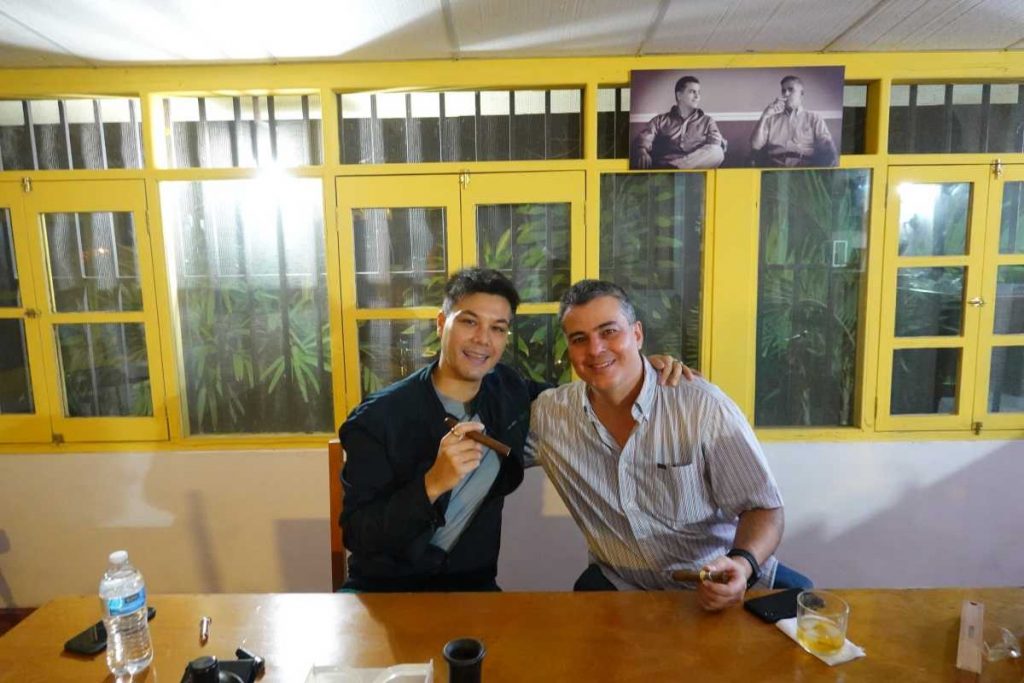
I met Julio R. Eiroa, the patriarch. A colourful man with a colourful life, he broke his spine in a plane crash but still radiates a love of tobacco when he talks. He built this business out of a forest. Dinner that night, cigars, then bed.
The Plantation
Day two. Eggs, beans, tacos, then a farm tour.
The first thing I noticed at the seedling greenhouse was a disinfectant station: a boot-dip, hand wash basin, and a full disinfectant room before entry. I’ve visited plantations in Cuba and the Dominican Republic and none had this. The second thing I noticed was an on-site clinic with a full-time doctor. The owners care about their staff, and in a labour-intensive industry, that directly affects product quality.
The operation is completely integrated. From seed to finished cigar, it all happens here. They have 52 tobacco barns, 26 greenhouses, and their own workshop full of John Deere machinery with in-house mechanics.
The Corojo That Started in Honduras, Not Cuba
Here’s something worth knowing: the first country to grow the original Corojo plant, the one used to make all pre-embargo Cuban cigars, was Honduras, not Cuba. And the Eiroa farm is the only operation still growing the true, pure, original Corojo plant.
It’s difficult to grow. It requires significant care and time. Most producers have moved on to hybrid varieties, but here they haven’t.
Everything is sun-grown. No shade netting. That means thicker leaves, more nutrients, fuller taste. And they use only two filler leaves per cigar, where most manufacturers use three.
Precision Agriculture
The plantation uses drip-feed irrigation: rubber lines running along every row, water delivered on demand. Combined with constant soil testing, they can adjust nutrients precisely, which means the leaf reaches its maximum potential flavour. The operation is Green Certified by Bayer and uses 100% organic inputs.
When you can control the exact water and fertiliser delivery to each plant based on live soil testing, you are not growing tobacco the way most people grow tobacco.
I’d never seen this level of agricultural technology applied to cigar tobacco. It blew my mind. Fifty years of accumulated knowledge combined with modern precision farming.
That was just day one and the morning of day two.