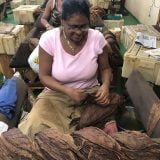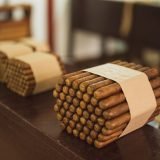
The filler is the interior of a cigar: the leaves packed inside the binder and wrapper. It is the biggest factor in strength, combustion, and overall character. Most premium cigars use a blend of three distinct filler leaf types.
The Three Filler Leaves
| Leaf | Position in plant | Burn rate | Strength | Role in the blend |
|---|---|---|---|---|
| Ligero | Top (most sun) | Slow | High | Adds strength, body, and burn time |
| Seco | Middle | Medium | Medium | Provides flavour and combustion |
| Volado | Bottom (least sun) | Fast | Low | Balances the burn, adds mild sweetness |
A master blender adjusts the ratio of these three leaves to achieve the desired strength, burn rate, and flavour profile. A ligero-heavy blend will be stronger and slower-burning. More volado gives an easier, lighter smoke.
Long Filler vs. Short Filler
Beyond leaf type, construction matters.
- Long filler: whole leaves run the full length of the cigar. Burns evenly, holds ash well, consistent draw. Used in all premium handmade cigars.
- Short filler (mixed filler): chopped leaf scraps bunched together. Burns hotter and faster, produces more harshness. Found in machine-made and budget cigars.
If you are buying a premium handmade cigar, whether Nicaraguan, Honduran, Dominican, or Cuban, it will use long filler. That is not a bonus feature; it is the baseline for a serious cigar.
Homogenised Tobacco Leaf (HTL)
Some cigars use HTL binders or fillers: tobacco processed into a sheet, similar to paper. It is cheap and consistent but produces inferior combustion and flavour. Common in low-cost cigars and some flavoured lines. Worth knowing if you are reading a cigar’s construction notes.
If you want to understand how filler choices affect the cigars in Cigar Emperor’s current stock, ask at the Bangkok or Phuket lounge. It is the kind of question that gets a straight answer.