Greece
Tobacco in Europe

Tobacco in Greece: A Legacy of Oriental Leaf
Greece, a major European tobacco producer, specializes in sun-cured Oriental leaf, a unique contribution to the global market. Understanding its history and cultivation methods reveals the distinct character of this tobacco.
Key Takeaways
- Greece is a significant European tobacco producer, specializing in Oriental leaf.
- Its tobacco history dates back to the late 16th century, becoming a pillar of agriculture.
- Principal growing regions are Western Thrace and Central Macedonia.
- Oriental tobacco, especially Basma varietals, dominates Greek production.
- A small, artisanal cigar micro-industry has emerged, using aged local leaf.
- The sector faces challenges from EU subsidy changes, competition, and aging infrastructure.
Greece holds a distinct position in the European tobacco landscape. In 2022, the nation produced 13,910 tonnes of tobacco on 8,070 hectares, securing its rank as 33rd globally and third in Europe for raw-leaf output [Tobacco Atlas], [Global Action to End Smoking]. This output is defined by its specialization in Oriental tobacco, a unique contribution to the global market.
Overview & Historical Context
Tobacco first arrived in Greece in the late 16th century. French merchants introduced *Nicotiana* seedlings to the Axios River valley near Thessaloniki [eKathimerini]. Monastic gardens then propagated cultivation through Ottoman Macedonia and Thessaly by the 17th century [eKathimerini]. This early spread laid the groundwork for a significant agricultural sector.
The formation of the Regia dei Monopoli di Stato in 1866 centralized leaf procurement and factory processing [Wikipedia]. This move established a robust raw-tobacco sector. By the early 20th century, tobacco had become a pillar of regional agriculture [Wikipedia]. This history underscores tobacco’s deep roots in the Greek economy and culture.
Tobacco cultivation in Greece is not merely agriculture; it is a centuries-old craft, deeply woven into the fabric of the land.
– Industry Insight
Key Tobacco Growing Regions
Greece’s principal tobacco cultivation zones are concentrated in specific areas. Western Thrace, including Xanthi and Komotini, and Central Macedonia, encompassing Serres, Drama, and Kavala, are primary regions [Fair Trade Tobacco], [ResearchGate]. These areas provide the ideal conditions for various tobacco types.
Smaller pockets of cultivation exist in Larissa, Imathia, and Kilkis. These locations are often used for seedling research and extension trials [Fair Trade Tobacco], [ResearchGate]. The Po Valley–like plains of Pieria and Pella in Macedonia support high-yield crops under mechanized regimes [Fair Trade Tobacco], [ITGA Atlas]. Conversely, the uplands of Thessaloniki province favor artisanal *Basma* strains, known locally as Basma Serres and Basma Kavala [Fair Trade Tobacco], [ITGA Atlas]. This regional diversity allows for specialized tobacco production.
Main Tobacco Types & Characteristics
Greek tobacco output is overwhelmingly dominated by Oriental tobacco. This category, primarily composed of sun-cured *Basma* varietals (Serres, Kavala) and the finer “Katerini” leaf, constitutes nearly 90% of national production [ITGA Atlas], [Tobacco Atlas]. Oriental tobacco is known for its aromatic qualities.
*Basma* undergoes a specific curing process: open-air sun-curing over three to five days [Tobacco Asia], [Australian Construction Awards]. This method imparts a sweet-spicy aroma, highly prized in cigarette blends. While Oriental tobacco is the mainstay, small volumes of Virginia and Burley tobacco are also cultivated in northern provinces. Virginia tobacco undergoes controlled flue-curing, and Burley is air-cured [Tobacco Asia], [Australian Construction Awards]. These different curing methods contribute to distinct flavor profiles.
The sun-cured Basma leaf from Greece offers a sweet-spicy aroma. It is a signature of the region’s tobacco heritage.
– Expert Observation
Production System & Regulation
Tobacco cultivation in Greece relies on approximately 8,000 registered growers [Agriculture and rural development], [Global Action to End Smoking]. These growers operate under annual quotas and strict phytosanitary standards. The Hellenic Ministry of Rural Development enforces these regulations within the framework of the EU’s Tobacco Products Directive (2014/40/EU) [Agriculture and rural development], [Global Action to End Smoking]. This regulatory environment ensures compliance with European standards.
Government revenues from excise and value-added taxes on raw and manufactured tobacco are substantial. These revenues exceeded USD 3.5 billion in 2022 [ITGA Atlas], [Trading Economics]. However, illicit trade remains a significant challenge, estimated at 18.8% [ITGA Atlas], [Trading Economics]. This highlights ongoing enforcement and fiscal challenges for the Greek tobacco sector.
Role in Global Trade
Greece’s role in global tobacco trade is primarily as a supplier of raw leaf. In 2022, its production of 13,910 tonnes of unmanufactured tobacco on 8,070 hectares accounted for 0.2% of global leaf output [Tobacco Atlas], [Global Action to End Smoking]. This places Greece 33rd worldwide in raw-leaf production [Tobacco Atlas], [Global Action to End Smoking]. Export revenues from raw leaf reached USD 120 million [ITGA Atlas]. These exports are primarily directed to EU manufacturers for use in blended cigarettes. The focus on Oriental tobacco gives Greece a specialized niche in the international market.
The global market demands specific leaf. Greece delivers, carving its niche with unique Oriental varietals.
– Market Analyst
Cigar-Specific/Unique Market Features
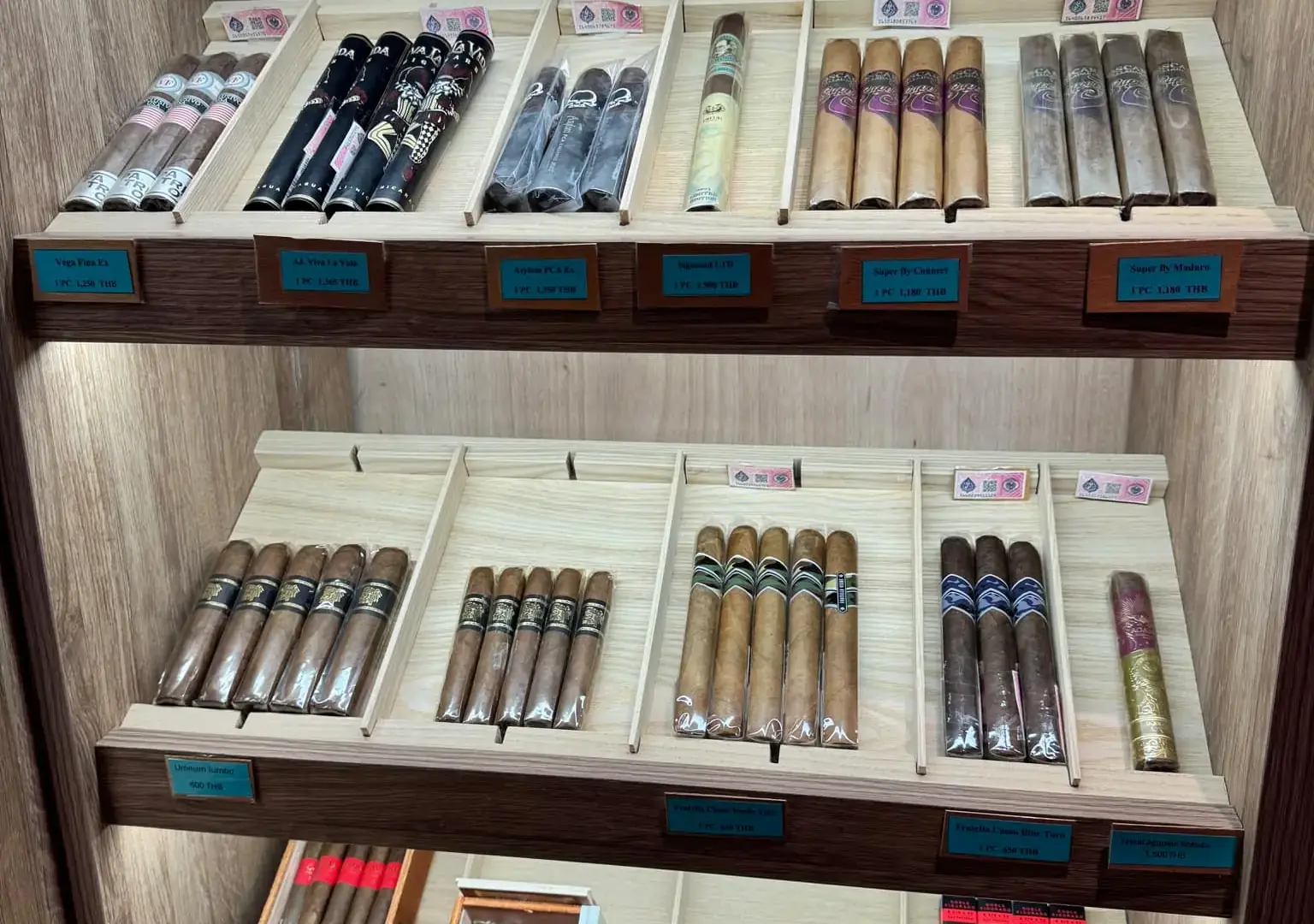
Greece does not traditionally supply significant cigar-grade wrappers or binders. However, a notable development is the emergence of a nascent cigar micro-industry. This industry began around 2020 in the valley northwest of Athens [AP Newsroom], [Cuban House of Cigars]. It produces artisanal lines at a rate of 25,000–30,000 sticks annually [AP Newsroom], [Cuban House of Cigars]. These cigars utilize sun-cured Greek leaf aged two to three years [AP Newsroom], [Cuban House of Cigars].
Research by Leaf Tobacco A. Michailides Group in Drama is exploring the potential of local *Basma* and *Katerini* for boutique filler applications [Michailides]. Despite these efforts, no large-scale cigar factories in Greece operate solely on domestic tobacco [Michailides]. This indicates a niche, artisanal approach rather than a mass-production model for cigars.

Current Challenges & Future Outlook
Greece’s tobacco area has contracted significantly, roughly 37% since 2010 [Global Action to End Smoking], [Statistics Greece]. This decline is largely due to EU subsidy realignments and increased competition from global low-cost suppliers [Global Action to End Smoking], [Statistics Greece]. These factors have driven smaller growers out of business, stressing rural economies that traditionally relied on tobacco cultivation.
Further challenges include aging sun-drying infrastructure and climate variability [Naegean Modern History]. These issues threaten the consistency of tobacco quality. In response, the Hellenic Ministry of Rural Development (MARD) is investing in greenhouse curing trials and varietal resilience studies [Naegean Modern History]. These efforts aim to sustain the sector and ensure its future viability amidst evolving market conditions and environmental pressures.
Adapt or fade. The Greek tobacco sector faces real challenges, but innovation is the only path forward.
– Industry Veteran
| Raw Tobacco Production (2022) | 13,910 t [Tobacco Atlas], [Global Action to End Smoking] |
| Cultivated Area (2022) | 8,070 ha [Tobacco Atlas], [Global Action to End Smoking] |
| Global Rank (Raw Leaf Output) | 33rd [Tobacco Atlas], [Global Action to End Smoking] |
| Registered Growers (Approx.) | 8,000 [ITGA Atlas] |
| Raw Leaf Export Revenue | USD 120 million [ITGA Atlas] |
| Illicit Trade Estimate | 18.8% [ITGA Atlas], [Trading Economics] |
References & Further Reading
- ‘Tobacco’s 300-year history in Greece | eKathimerini.com’
- ‘Greek Public Tobacco Factory – Wikipedia’
- ‘Greece | Tobacco Atlas’
- ‘Greece | Tobacco and Health Around the World’
- ‘Tobacco Regions of Greece’
- ‘Map of Greece showing tobacco and cotton production areas where…’
- ‘Greece – ITGA ATLAS’
- ‘Greek Leaf: Out of the Doldrums Yet? – Tobacco Asia’
- ‘Growing Tobacco in Greece’
- ‘[PDF] Greece – Agriculture and rural development – European Commission’
- ‘Food, Beverages And Tobacco (% Of Value Added In Manufacturing)’
- ‘The Greek cigar industry is booming despite the recession’
- ‘Vamma Del Sol Greek Cigars – Cuban House Of Cigars’
- ‘Greece – Leaf Tobacco A.Michailides SA – History’
- ‘[PDF] ANNUAL AGRICULTURAL STATISTICAL SURVEY: 2023’
- ‘Tobacco Cultivation, Tobacco Factories, and Cigarette Production’