For an event-focused look at modern Nicaraguan cigar culture, see Puro Sabor Nicaragua 2020.
This pivotal shift established Nicaragua as a global leader in premium cigar leaf, now a cornerstone for discerning aficionados worldwide.
Key Takeaways
Further Reading: Cigars from This Region
- Nicaragua’s tobacco industry surged post-1959, driven by Cuban expertise and seeds.
- Four key valleys—Estelí, Condega, Jalapa, and Ometepe—produce distinct, high-quality leaf.
- Cuban-seed Habano and Criollo ’98 are the dominant, prized tobacco types.
- Strict regulations and excise taxes govern the industry, supporting state revenue.
- Nicaraguan tobacco is vital for many ‘puro’ cigars, cementing its global premium status.
Executive Summary
Nicaragua emerged as a global tobacco leader after the Cuban Revolution, becoming a top exporter of raw tobacco. Its fertile valleys now produce some of the world’s most prized cigar leaf, anchoring many premium ‘puro’ cigars.
Overview & Historical Context
Commercial tobacco cultivation in Nicaragua accelerated significantly after the 1959 Cuban Revolution. This period saw Cuban growers and their valuable seed varieties migrate to Nicaragua’s fertile northern valleys. By 1968, the first domestic cigar brand, Joya de Nicaragua, was established in Estelí by Daniel Rodríguez in partnership with the Somoza regime. This marked Nicaragua’s definitive entry into global cigar production. Production volumes rose steadily from modest early outputs. In 2022, the country produced 7,786 metric tons of raw tobacco on 4,318 hectares, making Nicaragua the world’s 12th largest raw-tobacco exporter that year (Tobacco Atlas).
Key Tobacco Growing Regions
Tobacco thrives in four distinct Northwestern valleys: Estelí, Condega, Jalapa, and Ometepe. These regions offer unique volcanic soils and dry mountain breezes, which are crucial for enhancing leaf quality. Estelí stands as the epicenter for strong-flavor wrappers and fillers. Jalapa, conversely, produces finer-textured, sweeter Habano-seed wrappers. Secondary areas, such as Masatepe, have also been trialed for niche blends (CAO Cigars). Each valley contributes a specific character to the final cigar, making Nicaraguan blends complex and sought after.

Main Tobacco Types & Characteristics
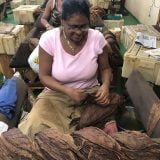
Nicaragua predominantly grows Cuban-seed Habano and Criollo ’98. Cuban-seed Habano is highly valued for its spicy aroma and dark veining. Criollo ’98 is prized for its use in binders and fillers. Habano wrapper leaves mature under open sun, then undergo a multi-stage air-drying process followed by controlled fermentation. Criollo and local hybrids produce robust filler leaves. These are air-cured in barn lofts for six to eight weeks to develop rich fatty oils (Wikipedia). This meticulous process contributes to the distinct flavor profiles found in Nicaraguan cigars.
The volcanic soils of Nicaragua impart a unique character to the tobacco, contributing to the strength and complexity found in its cigars.
– Industry Connoisseur
Production System & Regulation
Tobacco cultivation in Nicaragua involves approximately 15,000 smallholder farmers. Each farmer operates under a license, registered through MAGFOR (Ministerio Agropecuario y Forestal) procedures. The industry is regulated by the 2010 Tobacco Control Act (No 727) and its 2011 implementing decree, which govern production, packaging, and health warnings (Tobacco Control Laws, Tobacco Control Laws). In 2021–22, new technical standards were mandated, requiring sanitary registration and bolstering excise tax frameworks. Cigarette excise shifted from ad valorem to specific rates in 2009, with significant hikes of +210% in 2019 and further increases through 2021. These measures have diminished affordability for consumers but have boosted state revenue (WHO Extranet).Learn more about buying legally imported cigars in Thailand.
Role in Global Trade
Nicaraguan tobacco forms the foundation for many ‘puro’ cigars, supplying wrapper, binder, and filler leaves to renowned brands. Examples include Oliva Cigar Co., a Miami-based company that has grown tobacco in Estelí since 1995, and Padrón Cigars, which established its factory in Estelí in 1970. Joya de Nicaragua remains the oldest domestic manufacturer, its 1968 launch catalyzing varietal trials that positioned Nicaragua alongside Cuba, the Dominican Republic, and Honduras in premium cigar leaf quality. In 2023, Nicaragua exported USD 29.3 million of raw tobacco, ranking 39th globally (The Observatory of Economic Complexity). This export volume underscores Nicaragua’s significant contribution to the global premium cigar market.

Cigar-Specific/Unique Market Features
Nicaraguan tobacco is a cornerstone for many ‘puro’ cigars, where all components—wrapper, binder, and filler—originate from Nicaragua. The distinct characteristics of tobacco from its four main valleys contribute to a wide range of cigar profiles. Estelí tobacco is known for its strength and robust flavor, making it ideal for powerful wrappers and fillers. Jalapa valley yields finer-textured, sweeter Habano-seed wrappers, contributing to a more refined smoking experience. Ometepe tobacco, often found in unique blends like the Chesa Veglia Aphrodisiaq, offers distinct floral, raisin, and leather notes. Condega tobacco, as seen in the Condega Serie S and Serie F, provides rich, consistent flavors of cedar wood, cinnamon, and spicy pepper. These regional nuances allow for complex and balanced cigar creations.
| Production Volume (2022) | 7,786 metric tons |
| Cultivated Area (2022) | 4,318 hectares |
| Raw Tobacco Exports (2023) | USD 29.3 million |
Current Challenges & Future Outlook
The Nicaraguan tobacco industry faces several challenges. Water-intensive curing barns strain limited resources, a concern amplified by increasing climate variability that disrupts uniform leaf maturation. Despite government-funded agronomic research aimed at improving cultivation, smallholder farmers contend with rising energy costs for kilns. Global demand shifts toward alternative nicotine products also present a long-term challenge. Continued varietal improvement and sustainable fuel initiatives are critical for the industry’s future. Evolving obligations under the WHO Framework Convention on Tobacco Control (FCTC) may impose further compliance costs, requiring the industry to adapt to changing international standards.

Explore the selection of legally imported cigars available.
References & Further Reading
- Joya de Nicaragua
- Nicaragua | Tobacco Atlas
- Get To Know The Regions of Nicaragua – Renegade Cigars
- Outpost Field Notes: Nicaragua – CAO Cigars
- Types of tobacco – Wikipedia
- Nicaragua – Tobacco Control Laws
- [PDF] KE 101550-TRA-SE – Tobacco Control Laws
- Overview of tobacco use, tobacco control legislation, and taxation
- Oliva Cigar Co.
- Piloto Cigars Inc.
- Raw Tobacco in Nicaragua Trade
See Also / Related Tobacco Markets
- Tobacco in Cuba
- Tobacco in Honduras
- Tobacco in Dominican Republic
- Tobacco in Brazil
- Tobacco Around the World