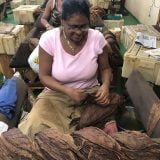
Colombia’s tobacco, though a smaller global player, offers unique characteristics prized by connoisseurs.
Understanding its origins and cultivation methods reveals why Colombian leaf is gaining recognition in the world of premium cigars.
Key Takeaways
- Colombian tobacco cultivation dates back to 1776, evolving from indigenous practices to smallholder farms.
- Santander, Huila, and Sucre are leading growing regions, with Santander’s high-altitude soils imparting robust, earthy flavors.
- Main types include flue-cured Virginia, air-cured Burley, and sun-cured Criollo, the latter being key for artisanal cigars.
- Production is dominated by smallholder farms under contract, facing challenges from illicit trade and mechanization limits.
- Artisanal brands like Caliqueño utilize local Criollo and Virginia fillers, creating distinctive, rustic cigars.
Overview & Historical Context
Tobacco cultivation in what is now Colombia has a deep history, tracing back to at least 1776. Initially, it flourished within indigenous communities, where the plant held cultural and practical significance. Spanish colonists later recognized its economic potential, expanding tobacco estates in the fertile Andean foothills [Atlas Tobacco Leaf]. This early development laid the groundwork for the industry that would evolve over centuries.By the mid-20th century, Colombian tobacco production had largely shifted to small-scale operations. Farms across departments such as Santander, Huila, and Boyacá primarily served the domestic cigarette manufacturing sector. This focus on internal demand meant Colombia remained a relatively modest player on the global stage for many years.In 2022, Colombian farmers harvested 4,238 tonnes of raw tobacco from 2,312 hectares of agricultural land [Tobacco Atlas]. While this volume positions Colombia among the world’s smaller producers, its contribution to the global market is distinct. In 2023, the nation ranked 50th in unmanufactured tobacco exports, with a value of USD 1.95 million [The Observatory of Economic Complexity]. This demonstrates a specialized, rather than mass-market, presence in international trade.
Key Tobacco Growing Regions
The heart of Colombian tobacco production lies within six key departments, each contributing significantly to the national yield. Santander stands out, accounting for 36% of the total output. Following closely are Huila (19%), Sucre (17%), Boyacá (10%), Norte de Santander (10%), and Bolívar (9%) [Atlas Tobacco Leaf]. These regions collectively form the backbone of Colombia’s tobacco industry.Santander, in particular, is renowned for its unique terroir. The Andean foothills in this department feature high-altitude, well-drained soils. Coupled with a semi-dry climate, these conditions are ideal for cultivating tobacco with a distinctive character. The leaf from Santander is known for its robust, earthy flavor profile, often carrying subtle notes of coffee and cocoa. This specific taste is highly prized and sought after for use in premium cigar filler blends [CAO Cigars]. The environmental factors of these regions directly influence the final quality and flavor of the tobacco, making them critical to Colombia’s contribution to the cigar world.

The true character of a cigar often lies in the soil it came from. Colombia’s leaf tells its own story.
– Dr. Matthew T. Nekvapil
Main Tobacco Types & Characteristics
Colombia cultivates a diverse range of tobacco types, each with distinct characteristics shaped by their curing methods and genetic lineage. The nation grows two main exotic types: Virginia and Burley. Alongside these, an indigenous Criollo group thrives, encompassing varietals such as Criollo Misionero, Criollo Chaqueño, Criollo Correntino, and Criollo Salteño [pulperiaquilapan.com]. These indigenous types are particularly significant for their unique flavor contributions.* Virginia: This tobacco undergoes a process known as flue-curing. It is cured in enclosed kilns over a period of five to seven days. This method produces a light-colored leaf that is notably high in sugar content [FAOHome]. Virginia tobacco is often used for its mildness and aromatic qualities.* Burley: In contrast, Burley tobacco is air-cured. This process takes place in ventilated barns over four to eight weeks. The result is a leaf with a low sugar content but a higher nicotine level [FAOHome]. Burley is valued for its ability to absorb flavors and its robust body.* Criollo: The indigenous Criollo varieties are typically sun-cured. This natural drying method contributes to their darker appearance and spicy flavor profiles. Criollo tobacco is highly regarded for its use in artisanal cigars, where its distinctive taste adds depth and complexity to the blend. The unique characteristics of these leaves are what set Colombian cigars apart.
A cigar’s soul is in its leaf. Colombian Criollo offers a depth few others can match.
– Connoisseur’s Wisdom
Tobacco Production System & Regulations
Colombian tobacco production is characterized by its reliance on smallholder farms. These farms vary in size, averaging 0.75 hectares in Santander and Boyacá, 1.5 hectares in Norte de Santander, and extending up to 6.5 hectares in Huila. A significant portion of these farms operate under sharecropping contracts with major processing companies, including Protabaco and ColtAbaco [repository.agrosavia.co]. This system provides a framework for cultivation and processing, but also presents certain limitations.Farmers are required to register with regional producer registries. These registries are managed by the Ministerio de Agricultura y Desarrollo Rural, ensuring oversight and data collection within the agricultural sector [sioc.minagricultura.gov.co]. Additionally, the Instituto Colombiano Agropecuario plays a crucial role by overseeing phytosanitary controls. This ensures the health of the tobacco crops and adherence to quality standards, protecting the integrity of the leaf from cultivation to harvest.Colombia has demonstrated a commitment to tobacco control since ratifying the WHO Framework Convention on Tobacco Control in 2008 [Cancillería]. Following this, the nation has enacted various measures, including limitations on advertising. More recently, Law 2354 of 2024 extended control to nicotine delivery systems, reflecting an evolving regulatory landscape [Ministerio de Salud]. The tobacco sector is a notable contributor to the national economy, generating approximately USD 200 million annually in excise revenues. However, this contribution is significantly offset by an estimated USD 114 million lost to illicit trade, a persistent challenge for the industry [Atlas Tobacco Leaf].

Compliance is not a suggestion. It is the foundation of a legitimate market.
– The Operator’s Rule
Cigar-Specific/Unique Market Features
While Colombia is not a major player in large-scale cigar wrapper operations, its unique contribution to the cigar world lies in its artisanal production and distinctive filler tobaccos. The nation’s local Criollo and Virginia leaves are central to this niche.Artisanal brands, such as Caliqueño, exemplify Colombia’s unique approach. These cigars utilize local Criollo and Virginia fillers, which are then bound with capa leaves grown in greenhouses [Wikipedia]. The result is a distinctive, rustic cigar that holds significant regional appeal. These cigars are not mass-produced, but rather crafted to highlight the specific characteristics of Colombian tobacco.Experimental trials by local growers are underway, with the aim of expanding premium filler shipments. These initiatives seek to leverage Santander’s flavor-rich leaf, which is highly regarded for its robust, earthy profile with notes of coffee and cocoa [CAO Cigars]. The goal is to integrate this unique tobacco into limited-release cigar productions, further establishing Colombia’s reputation for specialized, high-quality filler. This focus on unique, regional tobacco for filler blends underscores Colombia’s specialized role in the global cigar market, offering distinct flavors that cannot be replicated elsewhere.Explore the Cigar Emperor price list for a selection of premium New World cigars.
The best cigars are not always the most famous. Sometimes, they are the most authentic.
– The Connoisseur’s Atlas
Challenges & Future Outlook
The Colombian tobacco sector faces a complex array of challenges that impact its growth and sustainability. A primary concern is the reliance on small-scale sharecropping. This system inherently limits the adoption of mechanization, which in turn drives up labor costs, making Colombian tobacco less competitive on a global scale. The pervasive illicit cigarette trade further exacerbates economic pressures, as it significantly undercuts the prices of legal tobacco products, leading to substantial revenue losses for the legitimate industry [Atlas Tobacco Leaf].Operational inefficiencies also pose significant hurdles. Energy inefficiency in curing barns, for instance, increases production costs and environmental impact. Furthermore, the absence of a comprehensive, formalized contract-farming framework creates instability and uncertainty for smallholder farmers, hindering their ability to scale operations and invest in improvements. These structural issues present considerable barriers to the sector’s overall expansion and modernization.Despite these formidable challenges, there is a discernible shift towards renewed interest in Colombian dark and premium tobaccos. This was notably highlighted by Colombia’s participation at InterTabac 2024, a key international trade fair for tobacco products [tobaccojournal.com]. This presence suggests a growing recognition of Colombia’s unique leaf qualities on the global stage.Ongoing varietal research conducted by national institutes is a critical component of the future outlook. These research efforts are specifically aimed at boosting leaf quality and improving farm incomes. By developing new and improved tobacco varieties, Colombia seeks to enhance its competitive edge and secure a more prominent role in the premium cigar market. The focus remains on leveraging the distinct characteristics of Colombian tobacco, particularly its unique filler qualities, to carve out a sustainable and respected position in the global industry.

The future of tobacco is not just about volume, but about the distinct character each region brings to the leaf.
– Industry Insight
True quality is built from the ground up, starting with the soil and the hands that work it.
– The Foundation
Fast Facts Table (2022–2023)
| Tobacco Cultivation History | At least 1776 |
| Raw Tobacco Harvest (2022) | 4,238 tonnes |
| Agricultural Land Used (2022) | 2,312 hectares (0.02% of national cropland) |
| Unmanufactured Tobacco Exports (2023) | USD 1.95 million (Ranked 50th globally) |
| Stemmed & Stripped Tobacco Exports (2023) | USD 4.85 million (621,339 kg) |
| Leading Departments’ Output | Over 80% from 6 departments |
| Smallholder Farms | Approximately 4,000 farms |
| Annual Excise Revenues | Approximately USD 200 million |
| Lost to Illicit Trade | Approximately USD 114 million |
References & Further Reading
- Colombia – ITGA ATLAS
- Colombia | Tobacco Atlas
- Tobacco, unmanufactured, not stemmed or stripped in Colombia …
- OUTPOST FIELD NOTES: COLOMBIA – CAO Cigars
- Tabaco nacional, la joyita agropecuaria –
- Tobacco | Land & Water
- EL CULTIVO TABACO NEGRO EN COLOMBIA
- Tabaco – SIOC – Ministerio de Agricultura y Desarrollo Rural
- Tabaco | Cancillería
- Colombia refuerza la lucha contra el tabaco y los productos …
- Caliqueño
- “Marca Colombia”: The new hope of the Colombian tobacco sector …