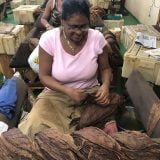
Indonesia’s tobacco industry is defined by its unique clove-blended kretek cigarettes.
Understanding this distinct leaf profile and production system is crucial for any serious tobacco connoisseur.
Indonesia stands as a global tobacco powerhouse, uniquely defined by its clove-blended kretek cigarettes. The nation’s tobacco industry, rooted in colonial history and smallholder farming, produces distinct dark air & sun-cured leaves, primarily for its dominant domestic kretek market. This deep dive explores the origins, cultivation, and unique characteristics that shape Indonesia’s tobacco landscape.
Key Takeaways
- Indonesia’s tobacco history is marked by the 1601 arrival of tobacco and the 1880 invention of kretek.
- Nearly 90% of tobacco leaf originates from East Java, Central Java, and West Nusa Tenggara, primarily from smallholder farms.
- The leaf profile is dominated by dark air & sun-cured blends (65%), flue-cured Virginia (25%), and dark-air cured Burley (10%).
- Kretek cigarettes are characterized by their honeyed and clove-sweet aroma, achieved by blending eugenol-rich cloves with air-cured tobacco.
- Indonesia is a net importer of raw leaf but a net exporter of finished cigarettes, particularly kretek.
Overview & Historical Context
Tobacco first arrived in Java in 1601, introduced to local farmers by Spanish traders KnightScholar. This early introduction laid the foundation for what would become a cornerstone of the Indonesian economy and culture. Under Dutch colonial rule, large-scale tobacco plantations expanded significantly in East Sumatra from the mid-19th century onward. This expansion was closely tied to Jacobus Nienhuys, who helped establish commercial tobacco cultivation in the region and build its export reputation for high-quality cigar leaf Encyclopaedia Britannica. The colonial era thus cemented tobacco’s commercial importance in the archipelago.
The defining innovation in Indonesian tobacco, kretek, emerged around 1880 in Kudus. Haji Jamhari, seeking relief for his asthma, blended locally grown tobacco with clove buds, creating a product that would later be named kretek djarum.com. This unique blend, with its distinctive crackling sound when smoked, quickly gained widespread popularity. The transition from artisanal creation to industrial production began by 1906, with Nitisemito’s Bal Tiga kretek brand. Further solidifying its market presence, PT HM Sampoerna launched the iconic Dji Sam Soe brand in Surabaya in 1913 Wikipedia. These early brands not only established kretek as a cultural phenomenon but also set the stage for Indonesia’s unique position in the global tobacco industry.

Key Tobacco Growing Regions
Nearly ninety percent of Indonesia’s tobacco leaf originates from three primary provinces: East Java, Central Java, and West Nusa Tenggara Tobacco Tactics. These regions are characterized by their reliance on small, family-run farms, which form the fundamental backbone of the country’s tobacco cultivation. The decentralized nature of these farms contributes to the diverse range of tobacco types produced across the archipelago.
In 2016, East Java led the national tobacco production, contributing 33.33 percent of the total output. West Nusa Tenggara followed closely, accounting for 31.24 percent, while Central Java contributed 22.03 percent economicsforhealth.org. This geographical concentration highlights the specific climatic and soil conditions favorable for tobacco growth in these areas. Contract farming has become increasingly prevalent, particularly in Lombok, within West Nusa Tenggara economicsforhealth.org. This system provides a structured framework for farmers, often guaranteeing quality standards and stable prices from major cigarette companies. The Bojonegoro Regency in Central Java is particularly notable for its cultivation of Virginia varieties, with over half of its workforce dedicated to tobacco cultivation Wikipedia. This demonstrates the deep economic and social ties between tobacco farming and local communities in these key regions.
The true character of a tobacco leaf is born from its soil and climate. Indonesia’s unique terroir yields flavors found nowhere else.
– Connoisseur Insight
Main Tobacco Types & Characteristics
Indonesia’s leaf profile is distinct and diverse, primarily dominated by dark air & sun-cured blends, which constitute a significant 65 percent of the total output USDA Apps. These leaves undergo prolonged natural drying processes, contributing to their robust flavor and darker appearance. Flue-cured Virginia accounts for 25 percent of the production, known for its brighter color and milder taste, while dark-air cured Burley makes up the remaining 10 percent USDA Apps. All these tobacco types are cultivated by smallholder farmers across the country, reflecting a traditional, labor-intensive approach to agriculture.
The hallmark of kretek, Indonesia’s signature tobacco product, is its honeyed and clove-sweet aroma Wikipedia. This distinctive characteristic is achieved through a precise blending process that combines eugenol-rich cloves with air-cured tobacco. The curing methods are tailored to the specific leaf type and intended use. Flue-curing for Virginia varieties is conducted in custom barns over a period of four to six days, allowing for controlled heat and humidity to achieve the desired leaf properties. In contrast, the dark air & sun-curing process, primarily used for the tobacco destined for clove cigarette blends, relies on prolonged natural drying Global Action to End Smoking. This meticulous attention to detail in cultivation, blending, and curing ensures the unique flavor profile and aromatic qualities that define Indonesian tobacco, particularly for the kretek market.

Production System & Regulation
Approximately 500,000 smallholder farms cultivate tobacco in Indonesia, with each averaging a modest 0.25–0.5 hectares Tobacco Reporter. This fragmented farming landscape is largely integrated into a system of contract farming agreements with major cigarette companies. These agreements are crucial for guaranteeing consistent quality and stable prices for the farmers, providing a degree of economic security Tobacco Reporter. Contract farming accounts for over half of the total tobacco output in the country Tobacco Tactics, underscoring its importance in the national production system.
The Directorate General of Estate Crops, operating under the Ministry of Agriculture, plays a central role in regulating the industry. It is responsible for overseeing producer registration and issuing annual production quotas WHO. This centralized control aims to manage supply and maintain market stability. Tobacco products in Indonesia are subject to an 8-tier specific excise tax structure tobaccotax.seatca.org, a complex system that influences pricing and consumption. Furthermore, the maximum tariff on imported tobacco leaf remains at 40 percent WHO, impacting the cost of raw materials for domestic manufacturers. In 2019, tobacco farming contributed a relatively modest 0.03 percent to the national GDP economicsforhealth.org, indicating its niche economic role despite its cultural significance. Recent regulatory changes include raising the minimum sale age to 21, banning single-stick cigarette sales, and restricting tobacco sales and advertising near schools and playgrounds Kementerian Kesehatan RI.
Regulation shapes the market. Understanding the rules is as vital as understanding the leaf.
– Industry Observer
Role in Global Trade
Indonesia’s position in global tobacco trade presents a unique dynamic. In 2022, raw tobacco leaf imports totaled US $617 million Tobacco Tactics. During the same period, raw leaf exports were US $266 million Tobacco Tactics. This significant disparity indicates that Indonesia is a net importer of raw tobacco leaf, relying on external sources to supplement its domestic production and meet the demands of its large manufacturing sector.
However, the trade balance shifts dramatically when considering finished products. Indonesia is a substantial net exporter of finished cigarettes, with exports reaching US $913 million Tobacco Tactics. This highlights the country’s strength in processing imported leaf into value-added products, particularly kretek, for both its massive domestic market and international distribution. The unique global demand for kretek, a product deeply embedded in Indonesian culture, drives this specific trade dynamic, positioning Indonesia as a key player in the global market for blended and aromatic tobacco products rather than raw leaf.

Cigar-Specific/Unique Market Features
While Indonesia is not a primary source for premium cigar wrappers or binders on a large scale, its North Sumatra’s Deli region does produce small volumes of specialized cigar-grade leaf USDA Apps. This leaf, known for its specific characteristics, is priced at approximately IDR 31,500/kg and finds its niche use in boutique filler blends USDA Apps. This indicates a specialized, albeit limited, contribution to the global cigar market.
Academic studies have identified Besuki in East Java, Klaten in Central Java, and Deli in Sumatra as historic centers for cigar tobacco cultivation Jurnal Febi. These regions historically cultivated tobacco suitable for cigars, though the scale of production for premium cigars has not matched that of other nations. Despite these historical roots, no large-scale cigar factories currently rely solely on Indonesian leaf for their production. The country’s unique leaf profile, particularly the air-cured tobacco used in kretek, defines its most distinct contribution to the global tobacco landscape. This focus on aromatic, clove-infused blends sets Indonesia apart from traditional premium cigar-producing nations, offering a different facet of tobacco’s versatility and a unique flavor experience for those who appreciate its distinct characteristics.
Every region offers a unique leaf. Indonesia’s contribution is distinct, aromatic, and deeply rooted in its own tradition.
– Tobacco Expert
Current Challenges & Future Outlook
The Indonesian tobacco industry faces significant and evolving challenges. A study conducted from 2011–2017 revealed a sharp decline in small- and medium-sized tobacco processors, dropping from 2,540 to 487 operators Global Action to End Smoking. This substantial reduction was primarily driven by escalating excise taxes Global Action to End Smoking, which increased operational costs and made it difficult for smaller businesses to compete.
Additional pressures on the industry include energy-inefficient curing infrastructures, which lead to higher production costs, and unpredictable weather patterns, which pose risks to crop yields and quality. Both factors add to the financial burden on farmers and processors. In response to these challenges, the Ministry of Agriculture is actively implementing sustainability initiatives and conducting varietal trials. These efforts aim to enhance overall productivity and build greater resilience within tobacco cultivation, ensuring the long-term viability of the sector. Looking ahead, heightened health regulations, both domestically and globally, coupled with broader shifts away from combustible tobacco products, are expected to further reshape demand and policy within Indonesia’s tobacco industry. This necessitates continued adaptation, innovation, and a strategic approach to maintain its unique position in the global market.
| 2022 Tobacco Production | 225,579 tonnes Tobacco Atlas |
| Agricultural Area (2022) | 204,933 hectares (0.35% of total) WHO |
| Smallholder Farmers | Approximately 500,000 Tobacco Reporter |
For those seeking to explore the diverse world of tobacco, understanding unique regional profiles like Indonesia’s is essential. Discover more about premium cigars and their origins by reviewing the Cigar Emperor price list.
References & Further Reading
- KnightScholar – Indonesian Tobacco: A Consumer Culture of Exploitation
- Encyclopaedia Britannica – Jacobus Nienhuys
- djarum.com – Heritage Of Kretek : Djarum – Semangat Kemajuan
- Wikipedia – Dji Sam Soe
- Tobacco Tactics – Indonesia Country Profile
- economicsforhealth.org – [PDF] The Economics of Tobacco Farming in Indonesia: Results from Two …
- Wikipedia – Bojonegoro Regency
- USDA Apps – [PDF] GAIN Report – USDA Foreign Agricultural Service
- Wikipedia – Smoking in Indonesia
- Global Action to End Smoking – [PDF] tobacco economic ecosystem in indonesia
- Tobacco Reporter – Inscrutable Islands
- tobaccotax.seatca.org – indonesia – tobacco tax program – SEATCA
- WHO – [PDF] Indonesia Country Profile
- Kementerian Kesehatan RI – Tekan Konsumsi Perokok Anak Dan Remaja
- Jurnal Febi – [PDF] The Cigar Tobacco Industry in East Java: Facing an Uncertain Future?
- Tobacco Atlas – Indonesia